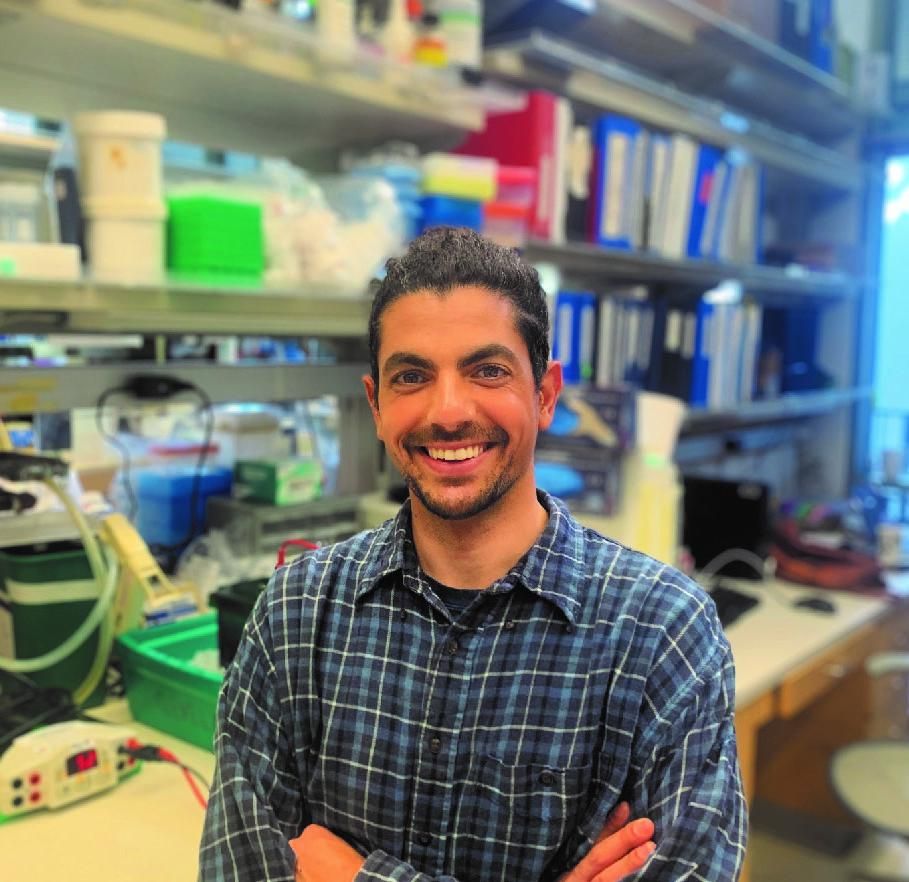
As co-chairs of the Dan Lewis Foundation (DLF) for Brain Regeneration Research, we are pleased to announce University of California San Diego neuroscientist Dr. Roy Maimon as the first recipient of the DLF Prize. This accolade pays tribute to his groundbreaking work in advancing our understanding of the brain's regenerative capabilities. Dr. Maimon's research focuses on stimulating the brain to create new neurons, a crucial process in mitigating the detrimental effects of neurodegenerative diseases and injuries.
Over the past three years, Dr. Maimon has worked on this problem by testing a new concept for treating neurodegeneration: using cellular identity conversion to generate new neurons in the nervous system. Most recently, Dr. Maimon and colleagues have designed and executed experimental tests using antisense oligonucleotides (ASOs) to generate glia-to-neuron conversion in the adult rodent nervous system. These new neurons, created from radial gliallike cells and other GFAP-expressing cells, matured and functionally integrated into endogenous circuits over a two-month period, ultimately altering the behavior of the mice. This therapeutically viable approach opens up exciting prospects for producing new neurons to replace those lost due to neurodegenerative disease.
The DLF will follow future developments in this exciting and cutting-edge area with great attention. We hope that unlocking the ability to generate new functional neurons from existing brain cells will prove to be of real value to those with severe brain injuries. Dr. Maimon and his colleagues have produced intriguing results.
The DLF has closely tracked the impressive record of ASOs to successfully reduce the effects of neurodegenerative diseases in mammalian models as well as in humans. We believe that the work of Dr. Maimon and others doing similar research will also apply to brain regeneration in persons who have experienced ABI or TBI.
The DLF is excited by Dr. Maimon's research findings and will continue to follow his work in the field of brain regeneration. In Dr. Maimon's own words, "In upcoming years, I will seek a position as an academic investigator with the long-term goals of leading the field of in vivo glia-into-neurons cell identity conversion, being a part of finding cures for neurogenerative diseases, and successfully mentoring a new generation of young scientists who have a passion for understanding the brain.”
The Dan Lewis Foundation is committed to the support of excellent young scientists who are developing promising approaches to unlock the regenerative capacities of the brain. We proudly award Dr. Maimon the first DLF Prize for his groundbreaking work.
Maimon, Roy, Carlos Chillon-Marinas, Cedric E. Snethlage, Sarthak M. Singhal, Melissa McAlonis-Downes, Karen Ling, Frank Rigo, et al. 2021. "Therapeutically Viable Generation of Neurons with Antisense Oligonucleotide Suppression of PTB." Nature Neuroscience 24 (8): 1089–99.